- Designed for conducted emission test setups.
- Facilitates controlled coupling of noise from EUT to power lines.
- Decouples and isolates external mains interference.
- Improves measurement accuracy and repeatability.
- Compatible with standard conducted emission measurement equipment.
- Rugged construction suitable for laboratory and field environments.


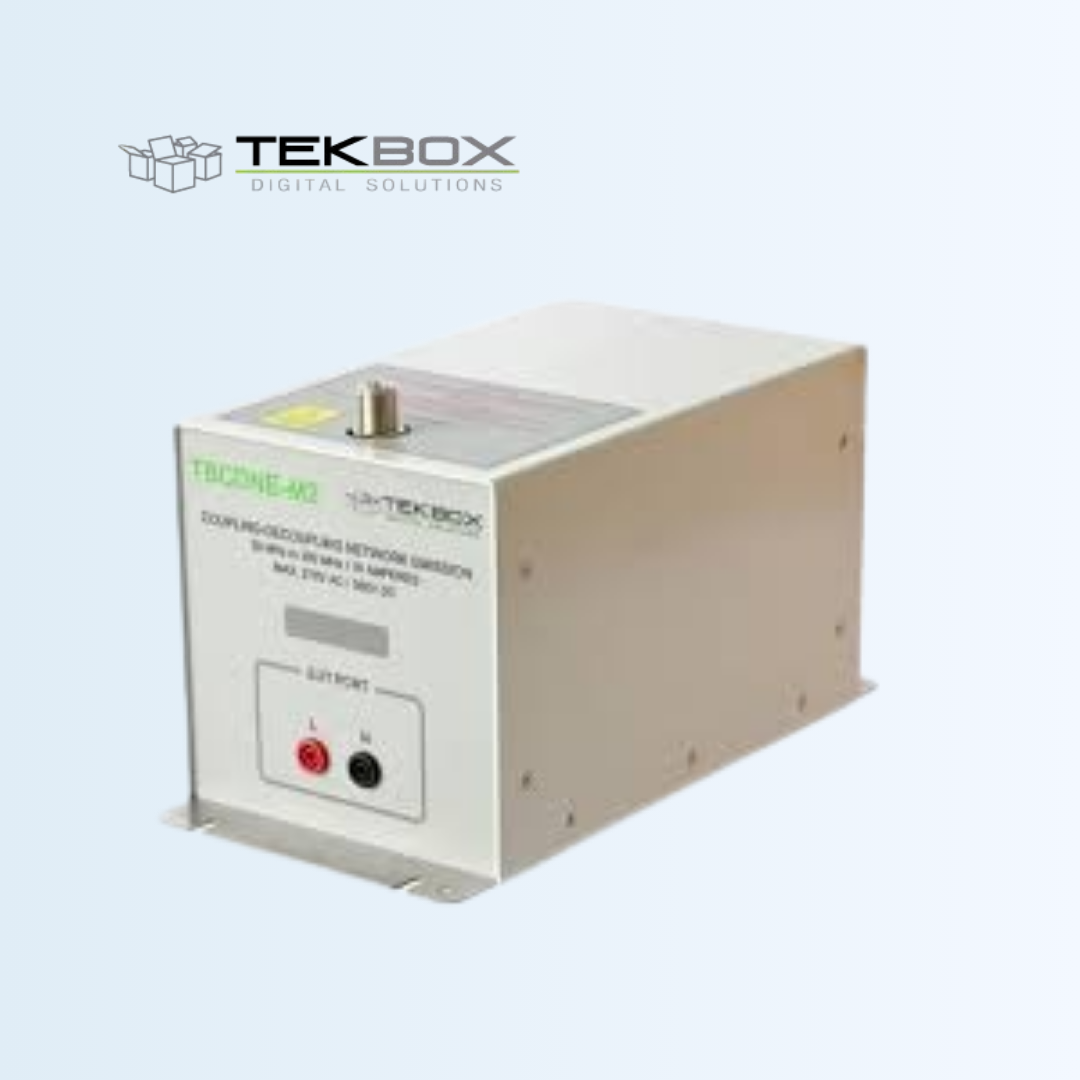

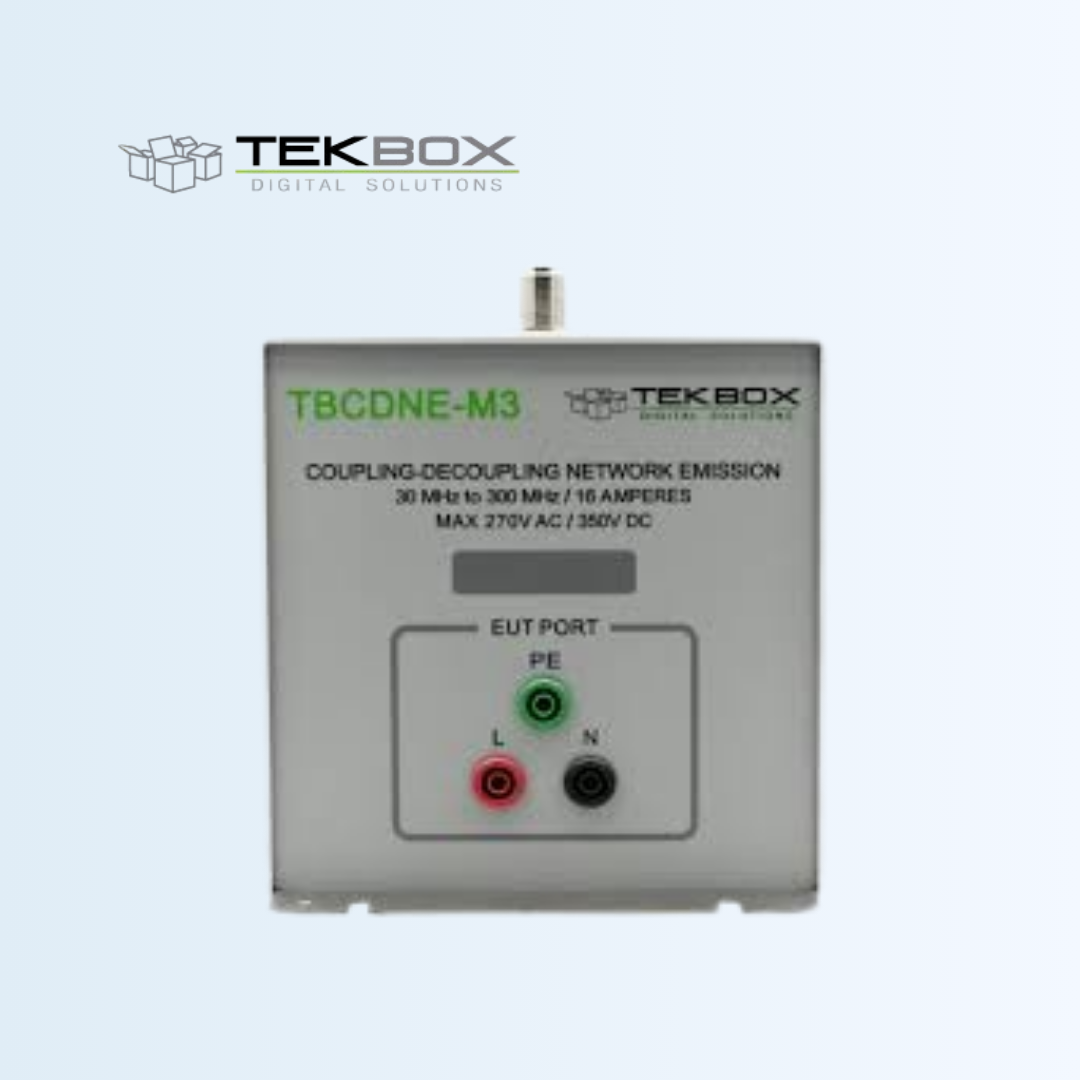
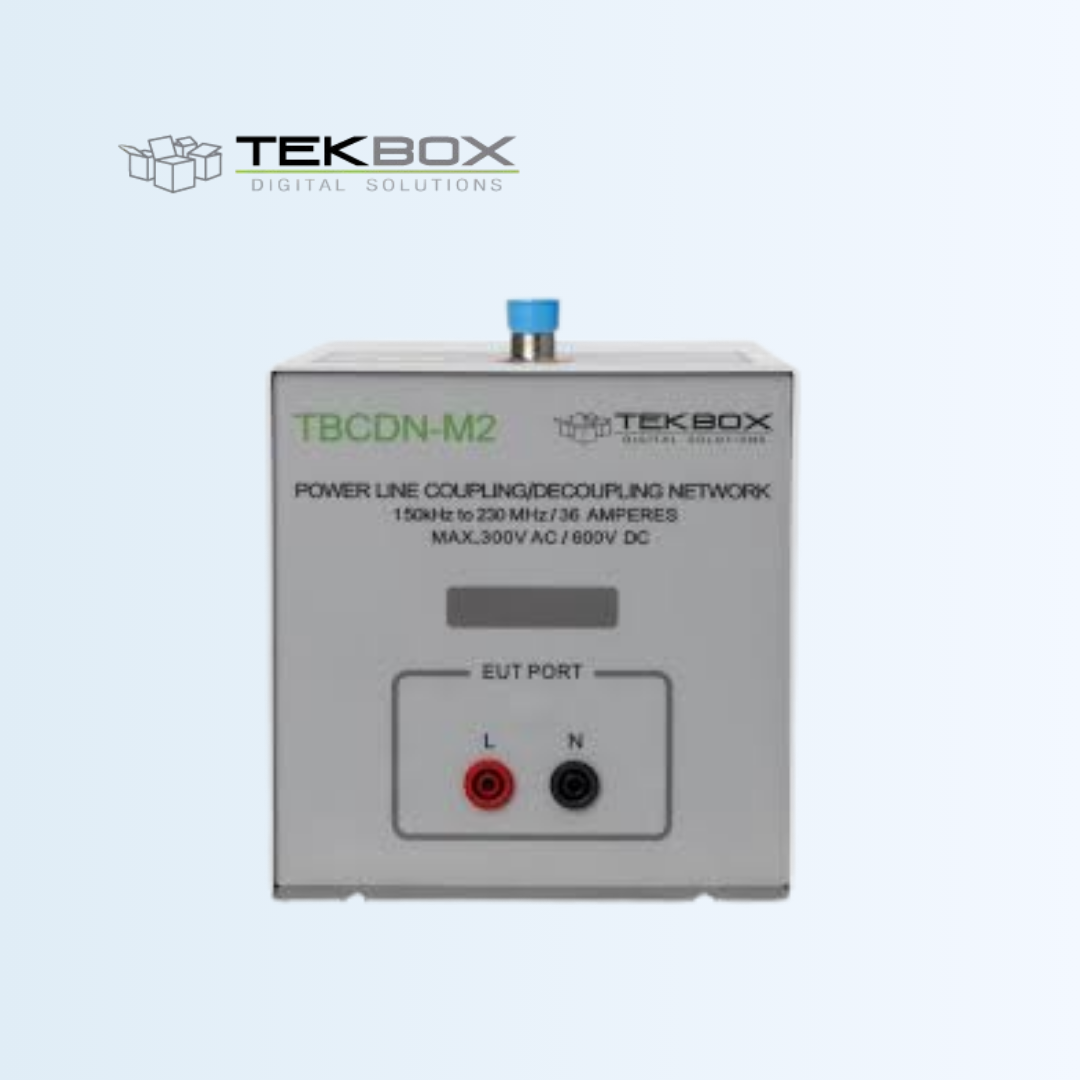
TBCDNE-M2
Coupling Decoupling Networks Emission
The TBCDNE-M2 Coupling / Decoupling Network – Emission is an EMC accessory designed to support conducted emission measurements. It enables accurate coupling of RF noise from the Equipment Under Test (EUT) onto power lines while simultaneously decoupling and isolating the test setup from external mains influences. This ensures that measured emissions reflect the EUT’s characteristics rather than interference introduced from the power source or environment, improving the integrity of conducted emission test results.
Features
Key capabilities and advantages
Specification
Technical specifications and parameters
| Compliance | CISPR 15 (IEC / EN 55015) Edition 9, CISPR 16-1-2, CISPR 16-2-1 |
| Maximum supply voltage | 300V AC, 600V DC |
| Maximum current | 16A |
| Frequency range | 30 MHz – 300 MHz |
| Common mode impedance | 150 Ω +10 / – 20 Ω (EUT port) |
| Phase response | 0° ± 25° (EUT port) |
| Differential mode impedance | 100 Ω ± 20 Ω (EUT port) |
| Voltage Division Factor | 20 dB ± 1.5 dB (EUT to RF output) |
| AE to EUT decoupling | > 30 dB |
| AE to RF output decoupling | > 30 dB |
| RF output connector | N – female |
| EUT / AE connectors | 4 mm banana safety jacks, 4 mm slots in base plate for GND connection |
| Housing material | powder coated aluminium, stainless steel base plate |
| Dimensions | 300 x 150 x 150 mm |
| Weight | ca. 2.5 kg |
| Included | NIST traceable calibration data |
| Optional accessories | Adapter panel with shorting bar and N-connector. 50 Ω to 150 Ω adapter panel for VDF measurement / calibration. OSL adapters for common mode impedance measurement / calibration. Balun and OSL adapters for differential mode impedance measurement / calibration |
Chat Us