







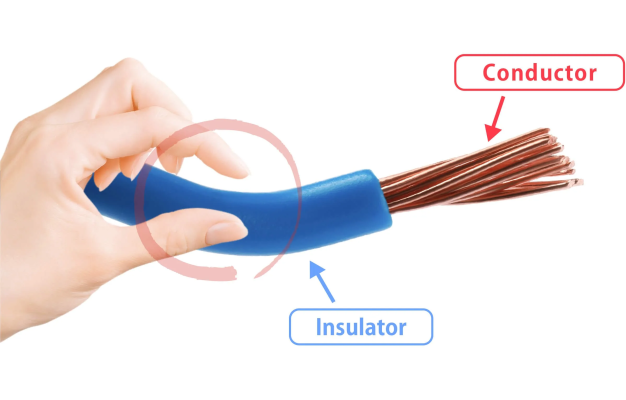
In the world of power electronics and manufacturing, insulation integrity is the cornerstone of product safety and reliability. To ensure that electrical devices do not pose risks of electric shock or fire, engineers rely on two critical diagnostic methods: Withstanding Voltage (Hi-Pot) Testing and Partial Discharge (PD) Testing.
While both are essential for quality assurance, they serve different purposes in the lifecycle of a product. Understanding when and why to use each is vital for maintaining high manufacturing standards.
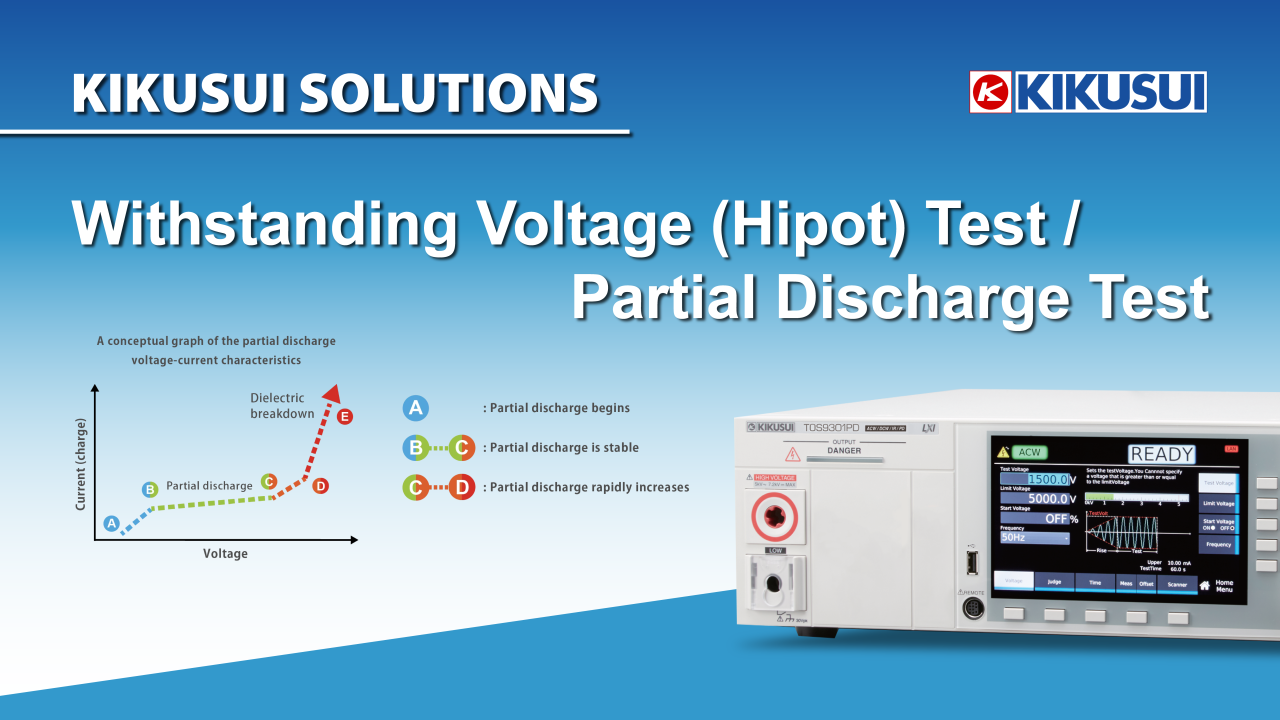
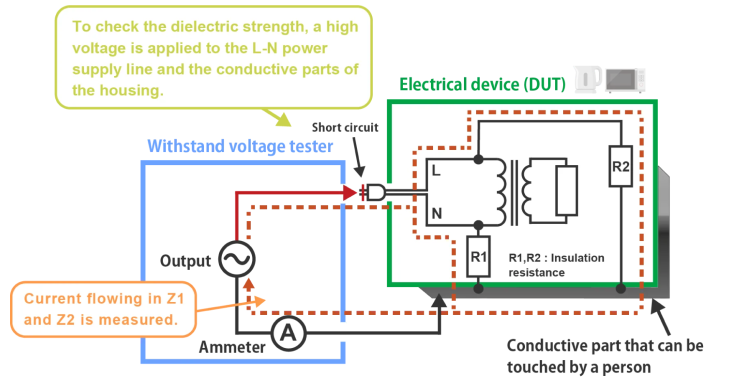
1. The Withstanding Voltage (Hi-Pot) Test Often referred to as the dielectric strength test, the Withstanding Voltage test is a fundamental safety evaluation. The Process: A voltage higher than the product’s normal operating range is applied to the insulation for a specified duration. The Purpose: It determines if the insulation has sufficient dielectric strength to withstand stress without breaking down. It is essentially a "pass/fail" stress test. The Outcome: If the insulation fails, it typically results in a dielectric breakdown—a surge in leakage current. Unfortunately, in most cases, a Hi-Pot test that results in a failure leaves the test object damaged beyond repair.
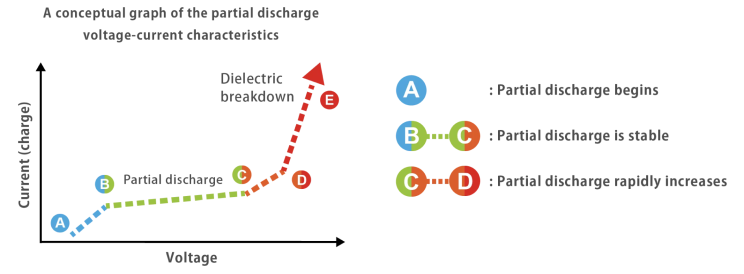
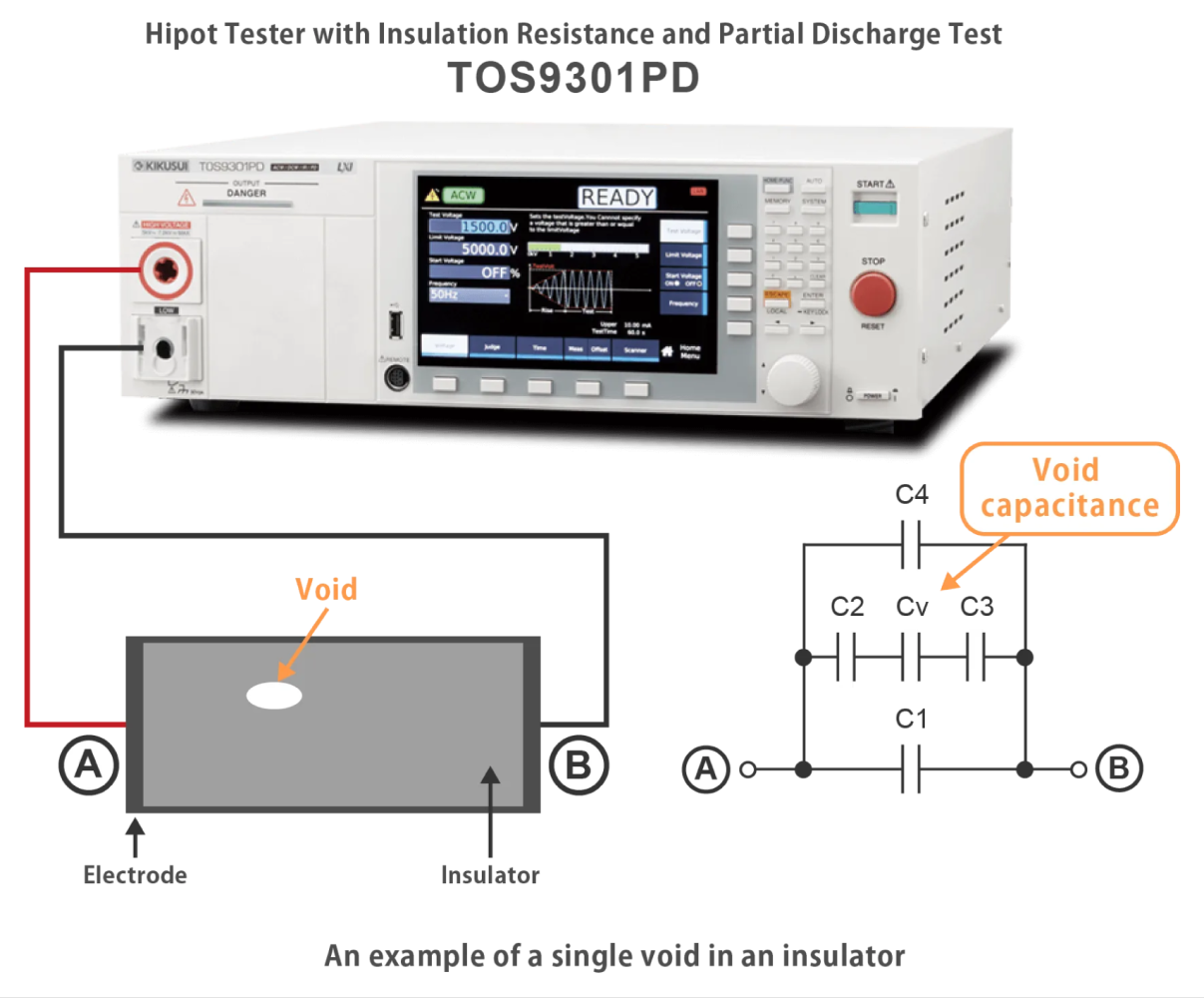
2. The Partial Discharge (PD) Test: Diagnostic Precision Unlike the Hi-Pot test, which checks for total breakdown, Partial Discharge testing is a diagnostic tool used to detect latent defects before they lead to catastrophic failure. What is Partial Discharge? It is a localized dielectric breakdown of a small portion of an electrical insulation system. This often occurs in tiny voids (air bubbles or gaps) within the insulator. The Advantage: Because these voids have low electrostatic capacitance, they discharge at lower voltages. Crucially, this discharge does not short-circuit the electrodes. Non-Destructive Testing: PD testing captures the electrical charge transfer before full dielectric breakdown occurs. This allows manufacturers to identify manufacturing variations, material defects, or design flaws without destroying the product.
Key Differences: At a Glance
To better understand how these two methods differ in their approach to insulation testing, here is a breakdown of their primary characteristics:
Primary Goal: Withstanding Voltage (Hi-Pot): Focuses on safety compliance. It is a binary "Pass/Fail" test designed to ensure the product meets safety standards. Partial Discharge (PD): Focuses on diagnostics. It provides deep insights into the quality and reliability of the insulation system.
Nature of Test: Withstanding Voltage (Hi-Pot): This is a stress test. If the insulation fails, it typically results in dielectric breakdown, meaning the test object is often destroyed. Partial Discharge (PD): This is a non-destructive test. It allows you to analyze the insulation state without damaging the product.
Detection Capabilities: Withstanding Voltage (Hi-Pot): Detects total dielectric breakdown—the point where the insulation completely fails to hold the voltage. Partial Discharge (PD): Detects latent defects, such as microscopic voids or air bubbles, which are early indicators of potential future failure.
Typical Application: Withstanding Voltage (Hi-Pot): Primarily used for final safety verification on production lines before a product is shipped to the consumer. Partial Discharge (PD): Primarily used in R&D, Quality Assurance, and material analysis to refine manufacturing processes and ensure long-term product durability.
Why Both Matter for Long-Term Reliability
Relying solely on Hi-Pot testing can be misleading. A product might pass a Hi-Pot test even if it contains microscopic voids that will eventually degrade over time, leading to field failures. By integrating Partial Discharge testing into your quality assurance process, you gain several advantages: Optimized Insulation Design: Validate designs with higher confidence. Reduced Manufacturing Variations: Identify process inconsistencies early. Enhanced Reliability: Evaluate the long-term performance of insulation materials. Cost Efficiency: Detect faulty areas nondestructively, allowing for analysis rather than just disposal.
Elevate Your Testing Standards
For R&D facilities, quality assurance labs, and production lines, the ability to perform both tests efficiently is a significant competitive advantage. Modern testing solutions, such as the Kikusui TOS9301PD, are designed to support AC/DC withstanding voltage tests, insulation resistance tests, and partial discharge tests in a single unit. By combining these methodologies, you ensure that your products are not only safe for consumers today but are also built to withstand the rigors of long-term operation.
Thank you for reading. Stay tuned for more updates from PT Unitronic Jaya.